I was on the road to Albuquerque Zine Fest last October with Shamon Cassette, when we saw a giant arrow pointed out of the ground along our journey to New Mexico…
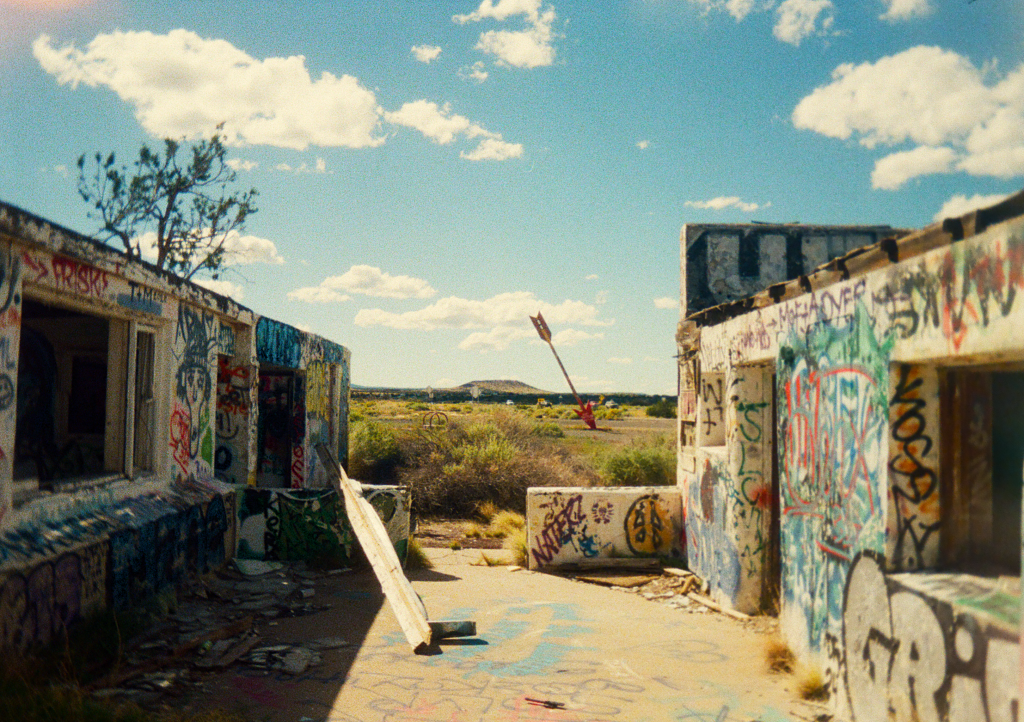
Our last thoughts turned to dust as we turned our heads. A beast of a wind was roaring through our windows, bass-heavy industrial rock cutting through van speakers, when just for a moment it felt like that arrow took a look back at us…
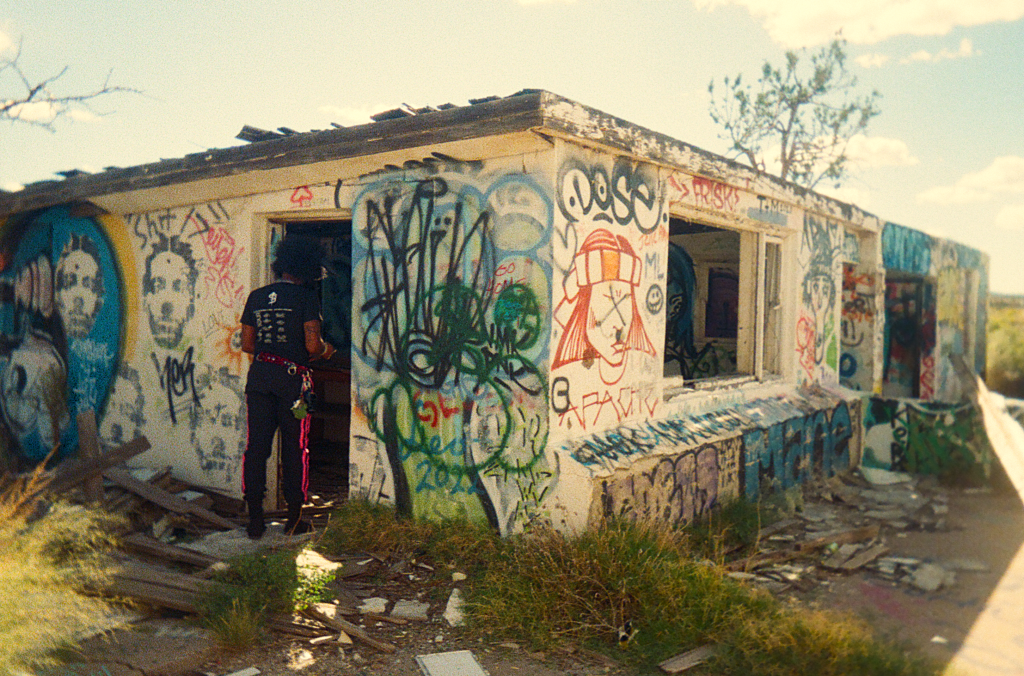
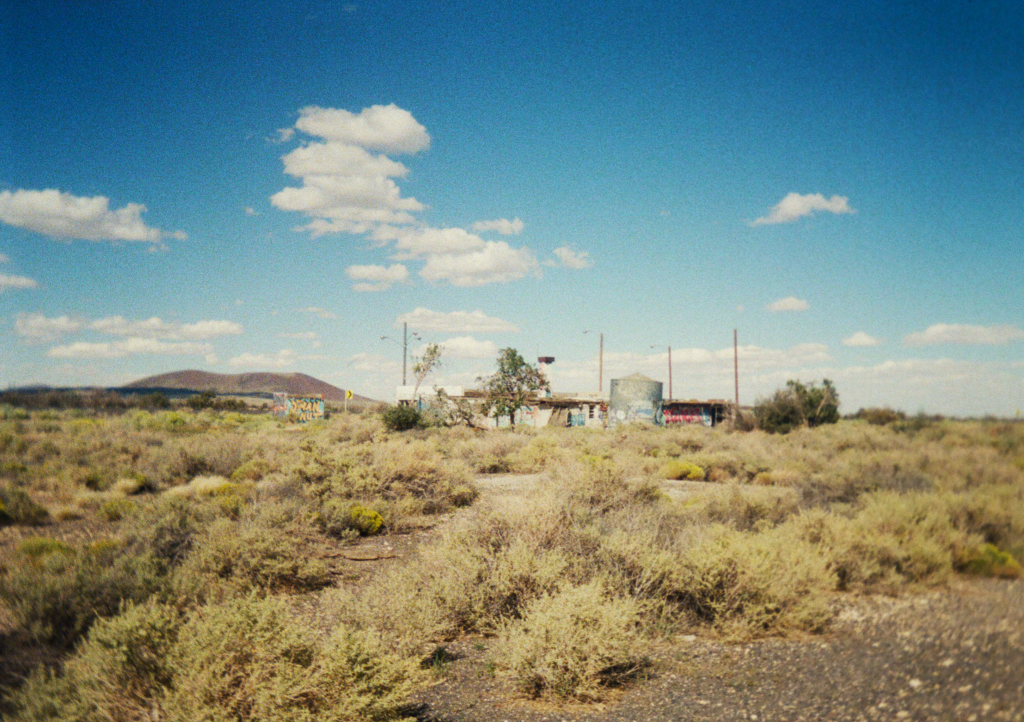
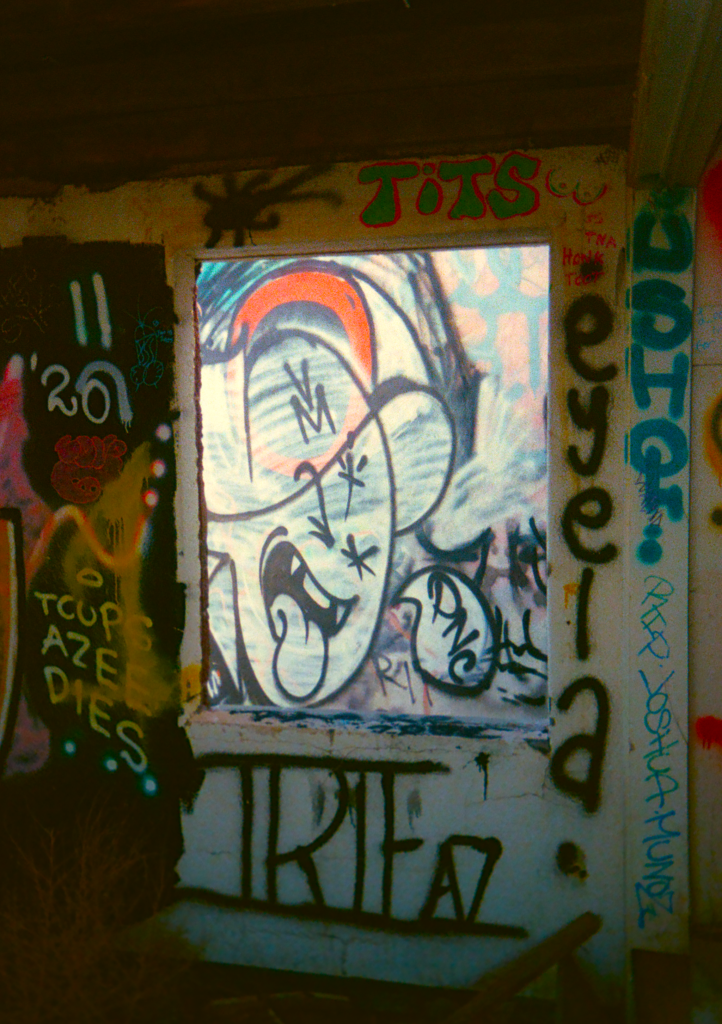
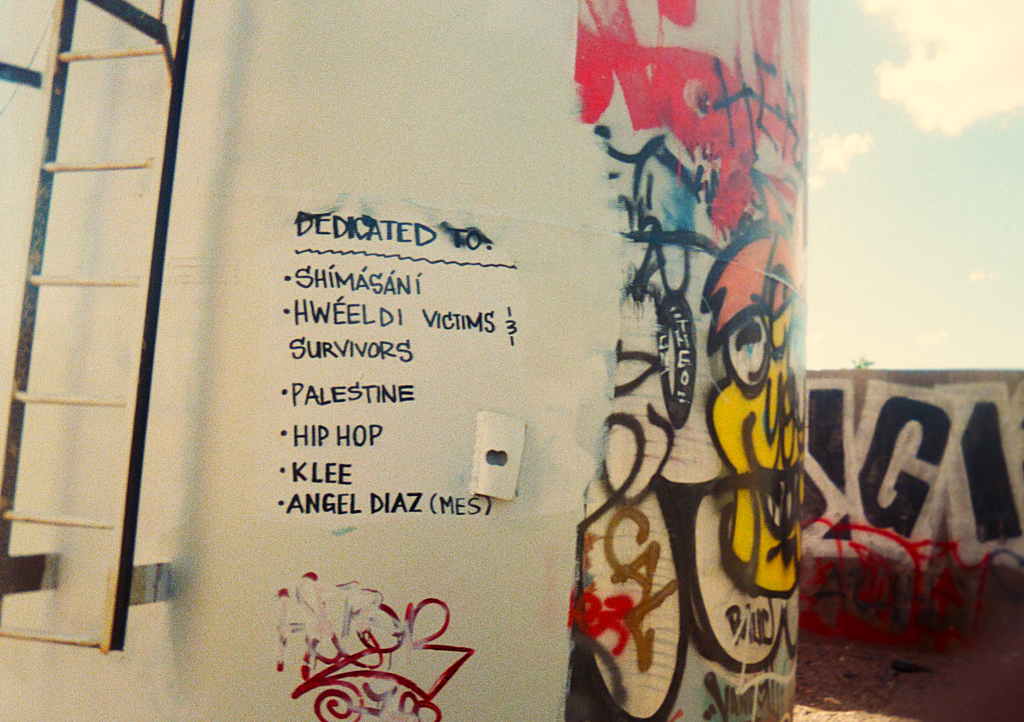
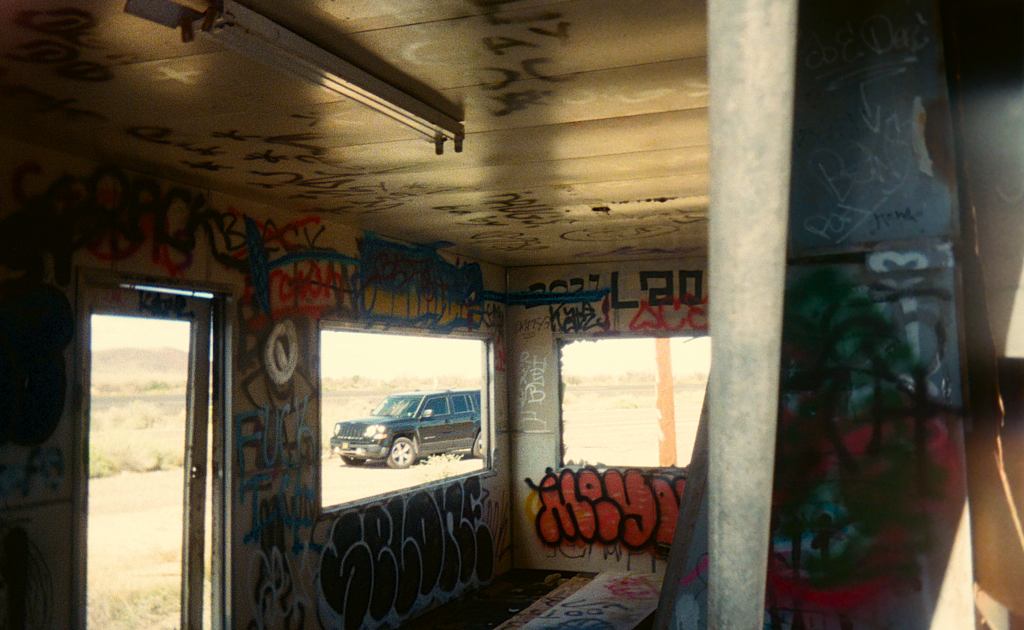
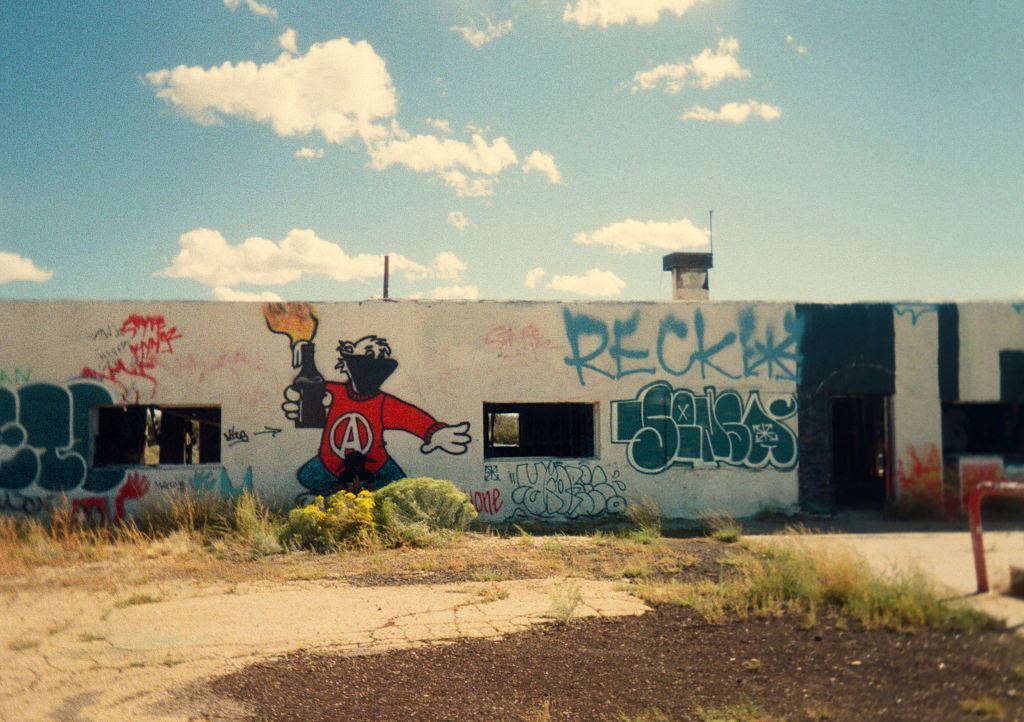
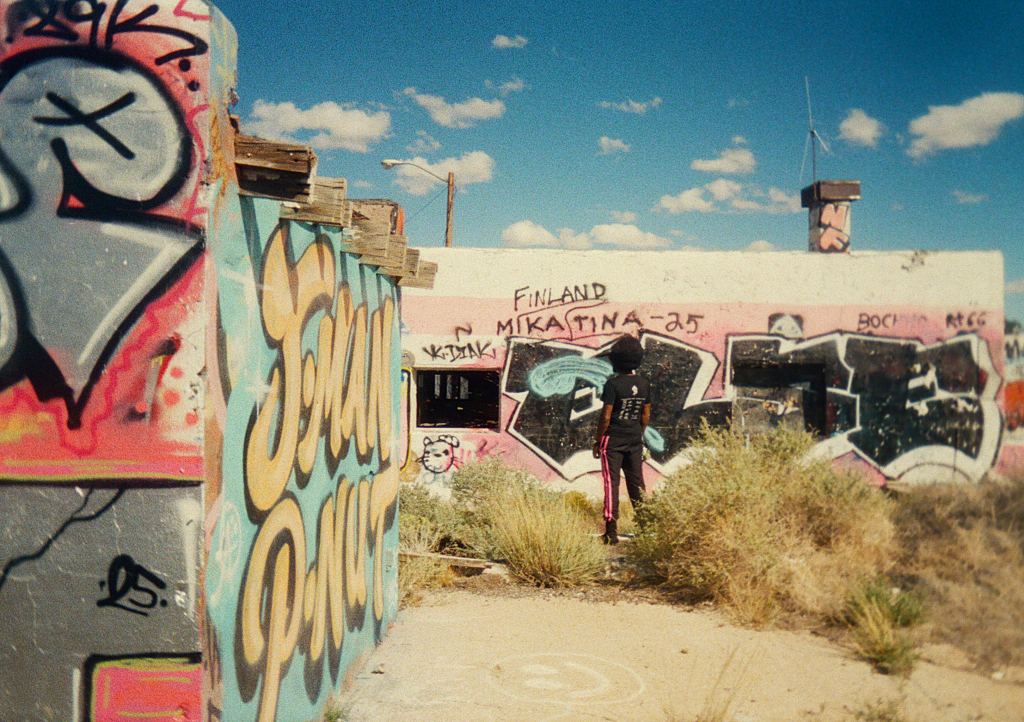
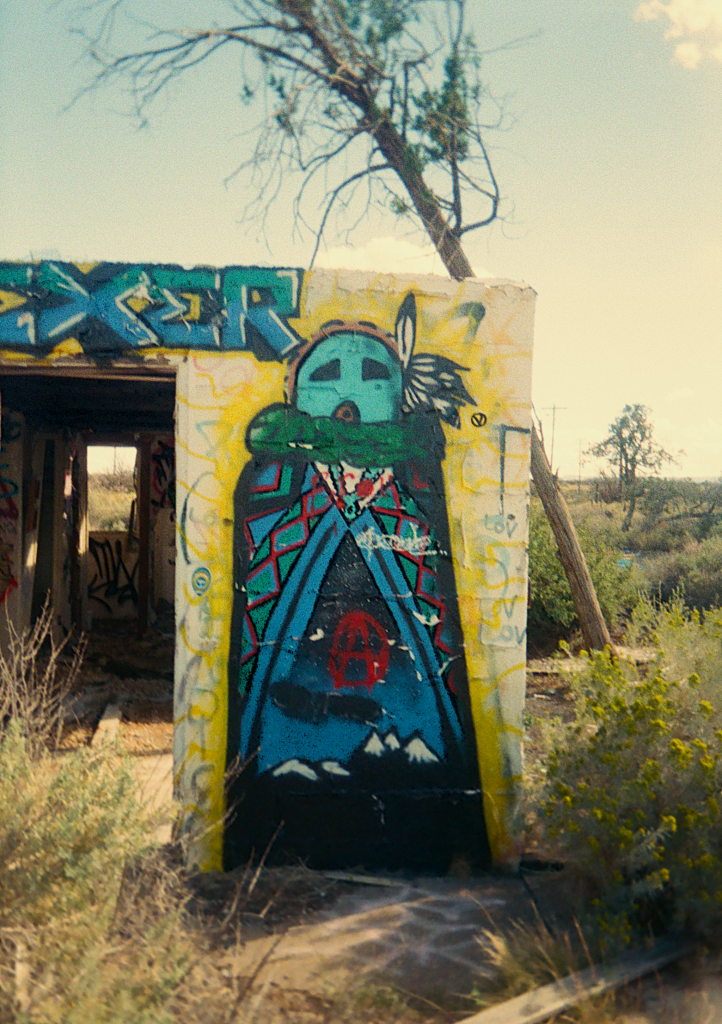
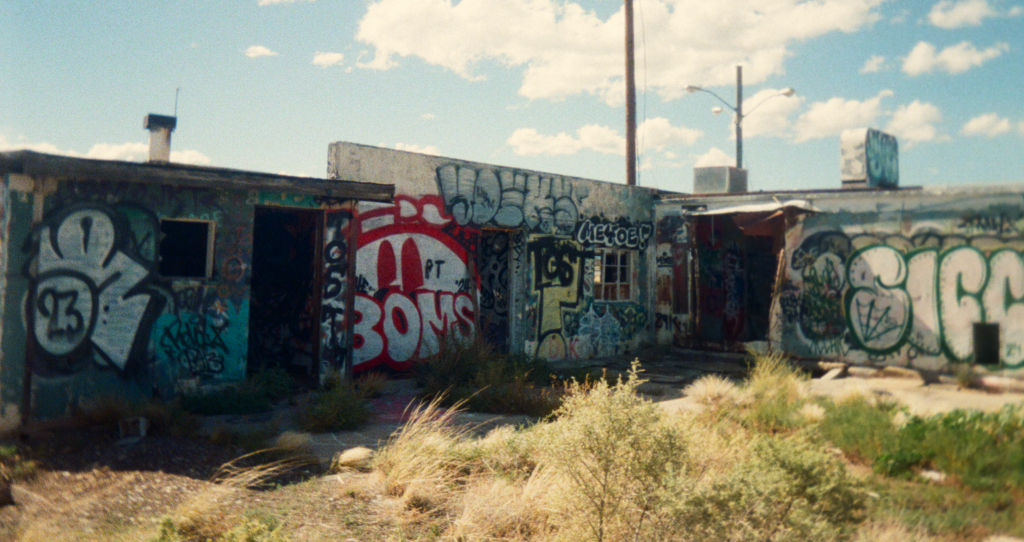
With just a nod we started for the next exit and rolled up to an abandoned trading post, littered with anarchist & Indigenous graffiti.
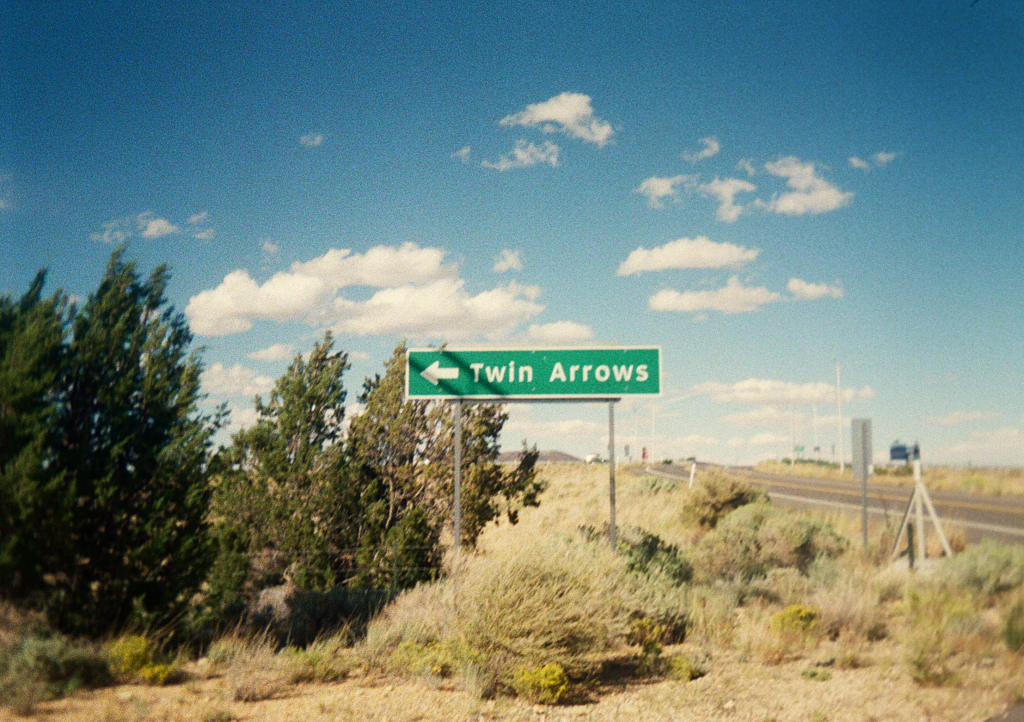
“Twin Arrows is a ghost town off of U.S. Route 66 in Arizona, located on historic Hopi & Diné <Navajo> land.
In 1540, Spanish conquistador Francisco Vázquez de Coronado was the first European to enter the area, leading a search for the mythical “Seven Cities of Cíbola,” a rumored network of wealthy New World cities.
<Instead he and his crew found the modest Zuni pueblo Hawikuh in classic adobe fashion.>
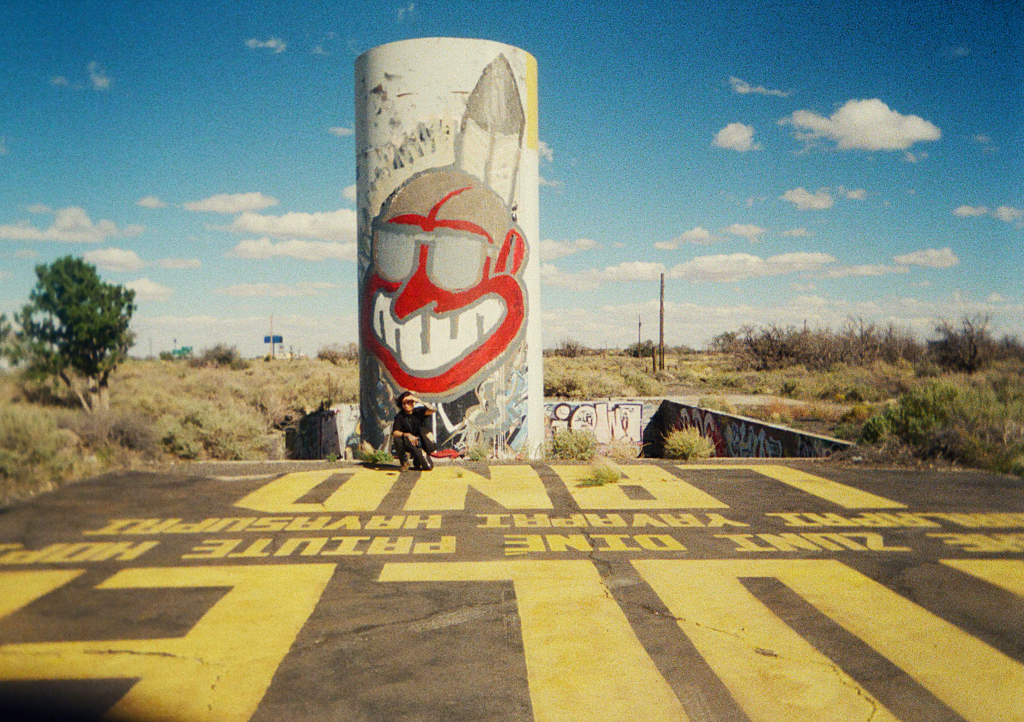
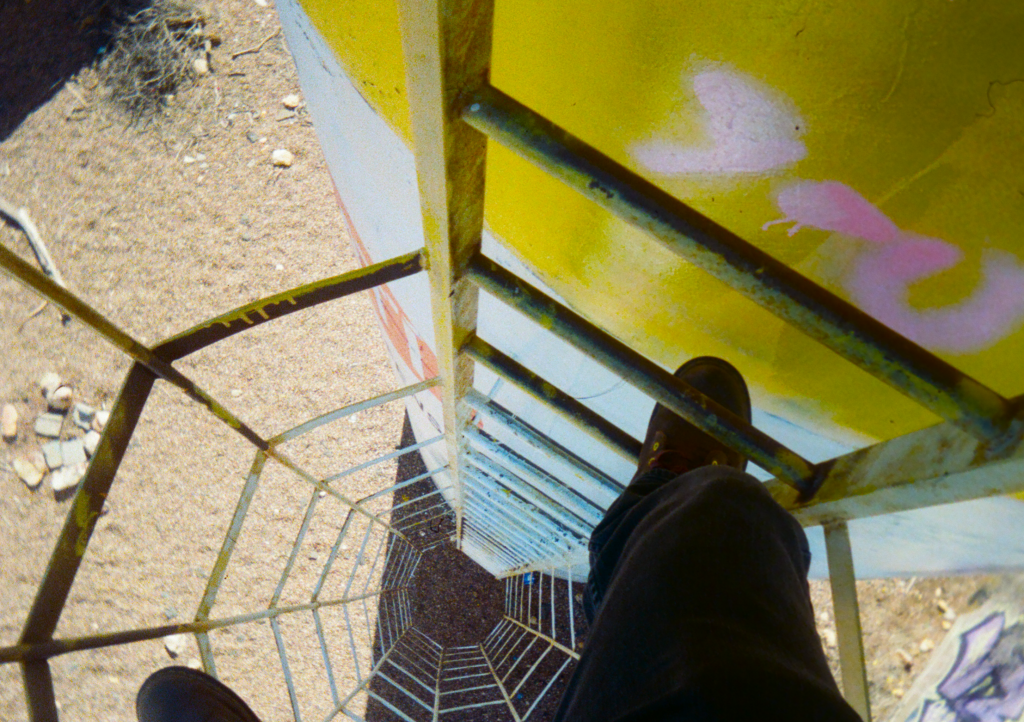
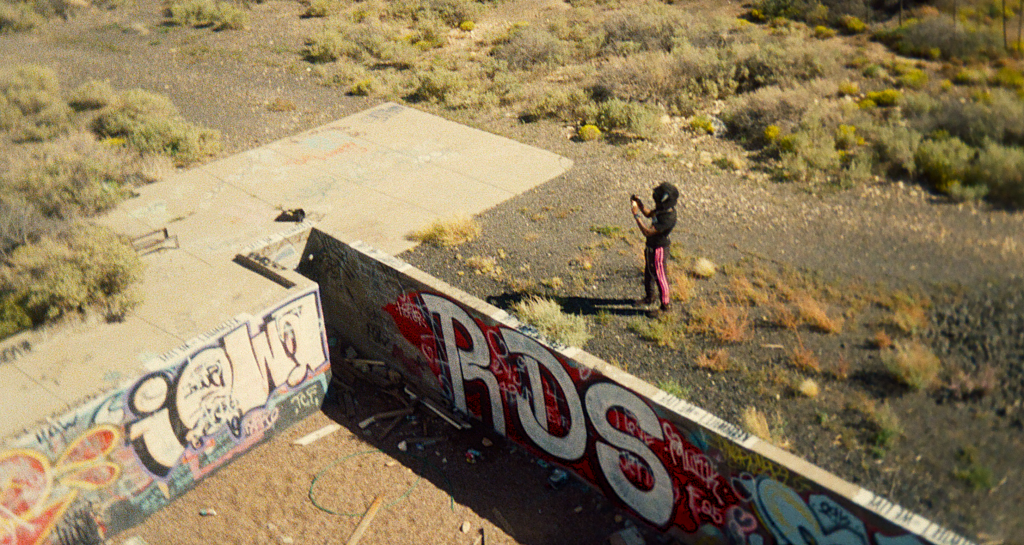
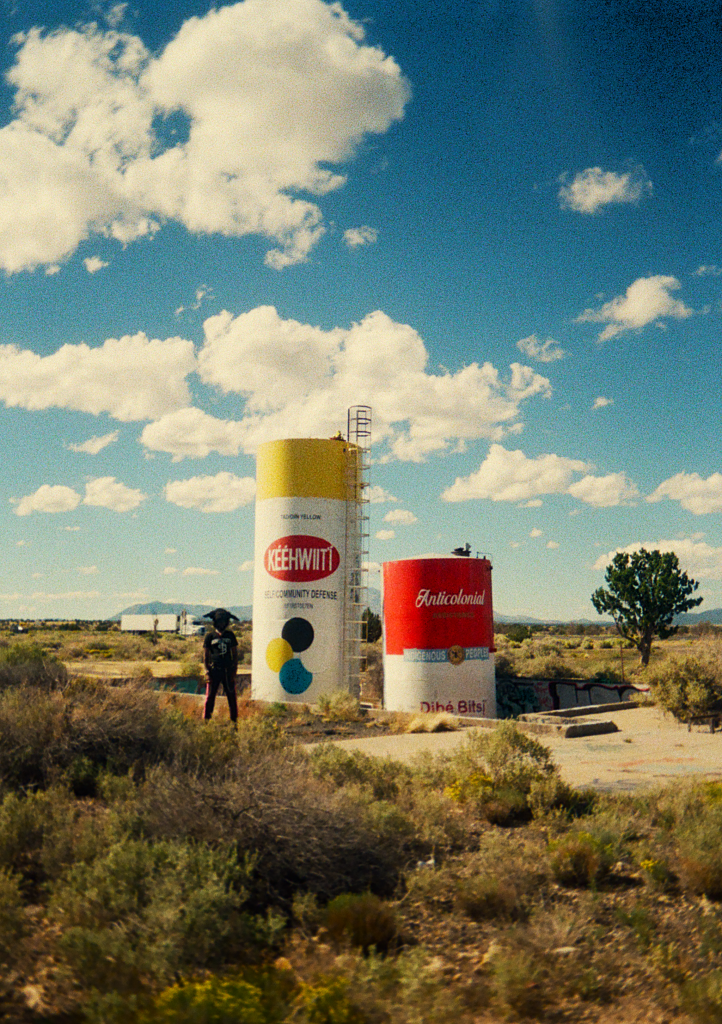
I actually climbed this tower trying to get a view from the top, but only halfway up the wind began to rattle the ladder cage in gusts. My balance was shot. Each step with care, I made it to the end of the railing & pushed my head above – sunlight crossed my face but as my chest followed, I was pushed back and almost fell the ≈40 foot height down into the gravel. Continuing felt like a test I did not need to prove or pass.
After becoming part of a loosely governed México, in 1848 it ceded into U.S. territory after the Treaty of Guadalupe.
In the 1880’s a wagon route was established between Flagstaff and Winslow, with the Atlantic/Pacific Railroad being built alongside. This formed into a leg of the National Old Trails road which soon became Route 66.
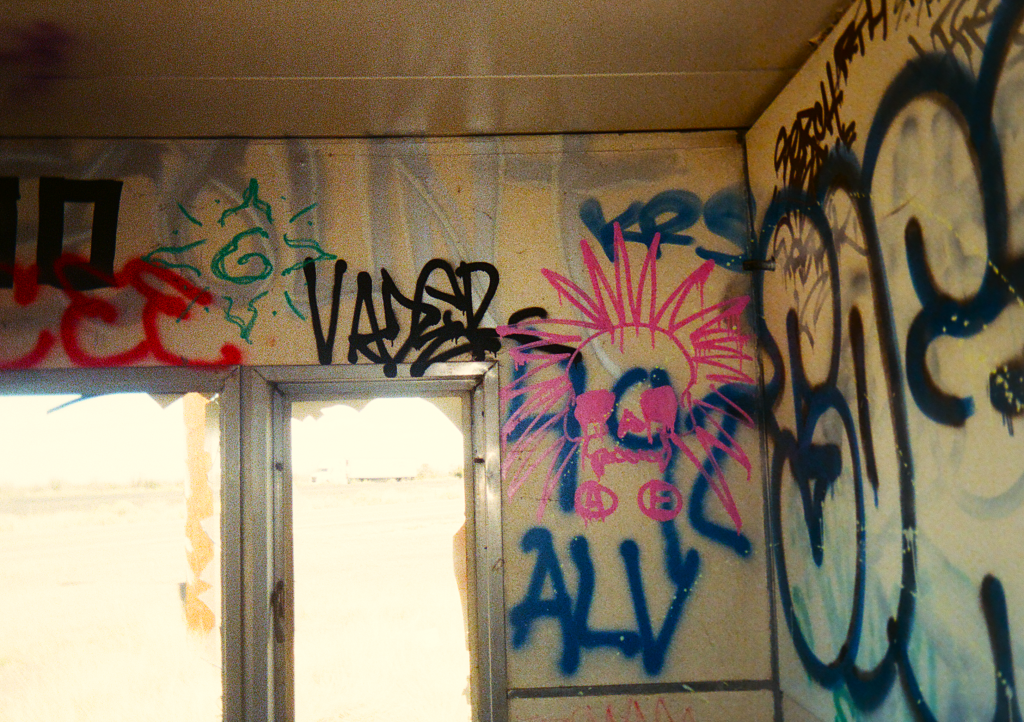
“Canyon Padre Trading Post” was established in the late 1940s, the store and diner earning slow profits until a rebrand to “Twin Arrows Trading Post,” inspired by the nearby city of Two Guns.
Two giant 25-foot arrows were installed on the property and, being so notable, motorists began dropping in over time.
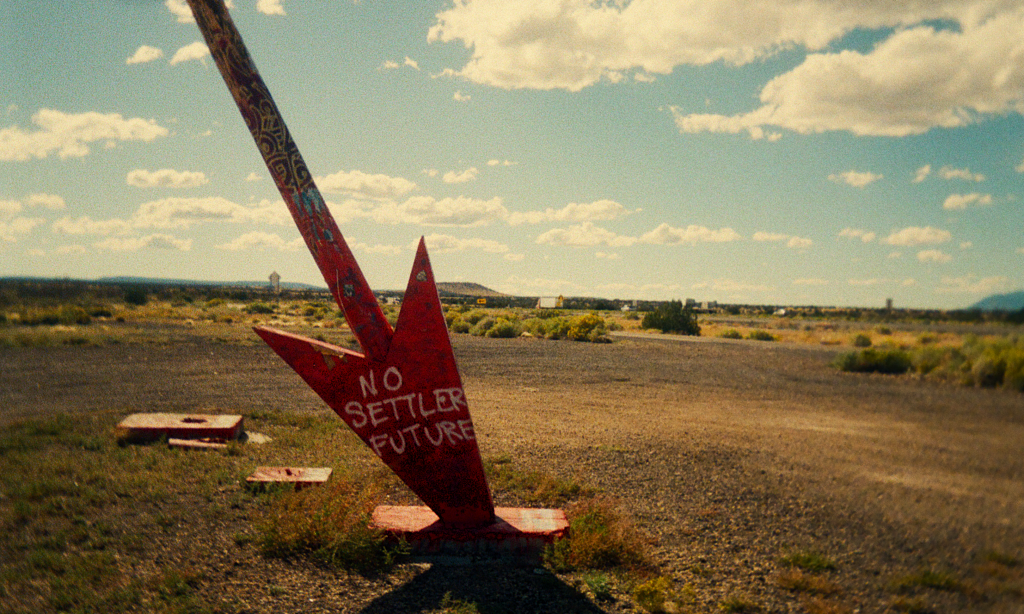
<Currently only one arrow remains.>
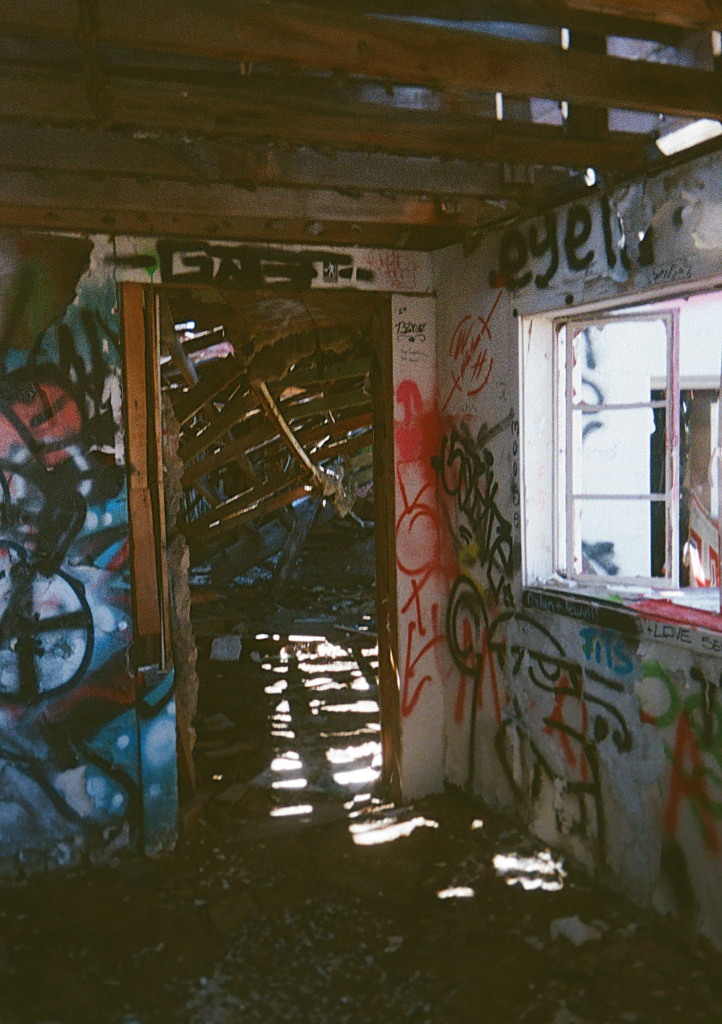
Interstate 40 began construction in 1957 to connect New Mexico and California on the southern side of Arizona, traffic being reduced significantly by completion in 1990. The location was passed down until 1995, proving to be too close to Flagstaff for a successful highway stop. Since then the property, including its two giant water towers, has become a canvas for locally Indigenous graffiti artists as well as international painters & abandoned adventure enthusiasts.